
starring Dr. Hal !
Showing podcasts 1 to 20 of 236 NEXT
SOLO FLIGHT ON FRIDAY NIGHT
September 25, 2026 10:00pm
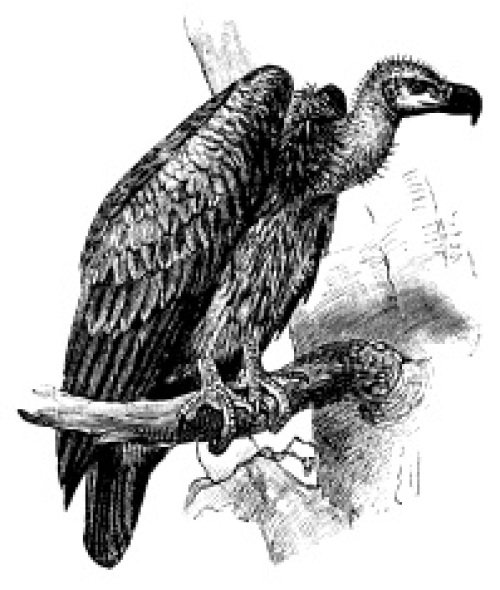
OR, UNDER THE VULTURE TREE. We know poems about animals, sea monsters, flying creatures... The latter category includes bats, nightingales, skylarks-- and vultures. Three poems about those birds (pro-Vulture), of which we begin with "Under the Vulture Tree" by David Bottoms. Follows a Mission Statement. Were there any listeners? The studio equipment no longer shows that information.
A VISIT FROM MR. NORMAL
September 18, 2026 10:00pm
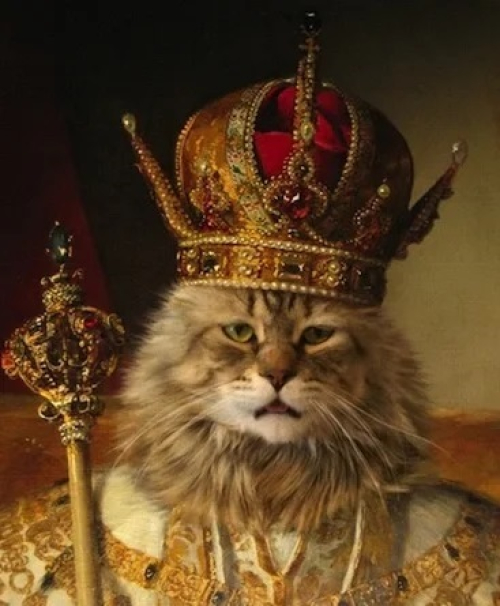
WHO HEADS THE CAT-WORSHIPING CULT of Holofelinity. We discuss multifold topics. The recent celebration of this Cult was abruptly cancelled, but another is sure to take place in the fullness of Time. In ancient Egypt, cats were represented in social and religious scenes dating as early as 1980 BC. Several ancient Egyptian deities were depicted and sculptured with cat-like heads: Mafdet, Bastet and Sekhmet, representing justice, fertility, and power, respectively. And the deity Mut was also depicted as a cat and, at times, in the company of a cat.
Cats are praised for killing venomous snakes, rodents and birds that damage crops, and protecting the Pharaoh since at least the First Dynasty of Egypt. Skeletal remains of cats have been found among funerary goods dating to the 12th Dynasty. The protective function of cats is further indicated in the Book of the Dead, where a cat represents Ra and the benefits of the Sun for life on Earth. Cat-shaped decorations used during the New Kingdom of Egypt indicate that the domesticated cat became more popular in daily life. Generally, cats were depicted in association with the name of Bastet. The Holofelinity cult acknowledges this but also posits an extraterrestrial origin...
Cats are praised for killing venomous snakes, rodents and birds that damage crops, and protecting the Pharaoh since at least the First Dynasty of Egypt. Skeletal remains of cats have been found among funerary goods dating to the 12th Dynasty. The protective function of cats is further indicated in the Book of the Dead, where a cat represents Ra and the benefits of the Sun for life on Earth. Cat-shaped decorations used during the New Kingdom of Egypt indicate that the domesticated cat became more popular in daily life. Generally, cats were depicted in association with the name of Bastet. The Holofelinity cult acknowledges this but also posits an extraterrestrial origin...
CHRONICLE OF THE BROKEN GOD
August 21, 2026 10:00pm
A PROMETHEAN CONQUEROR, as supposed by transcendent mythopoetic theoreticians, concerns our epigraph.
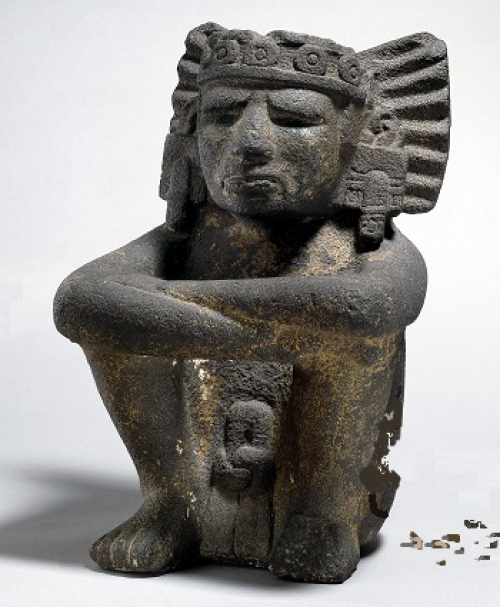
Perhaps its divinity is inherent in, let us say, an ancient Mayan idol — a deity of death — found in Mexico. Or alternatively, a particular Mesoamerican imago of numinous power, once adored and venerated, like the shattered Aztec Coyolxauhqui Monolith. Other effigies comprise idols smashed during Spanish \"extirpation\" campaigns, or Exorcismic Ritual Termination, during which sacred objects were intentionally broken and buried by friars and priests working for the Holy Office of the Inquisition.
But this fate was not original to the barbarous Conquistadores. Many Mesoamerican and pre-Columbian cultures intentionally smashed, dismembered, or decapitated stone and ceramic idols when rulers changed, cities were abandoned, or a sacred object\'s spiritual life cycle ended.
Yet most significantly, during the 16th century miliant Spanish missionaries conducted \"Burning of the Idols\" Trials and public destruction, breaking and defiling Native religious sculptures to enforce and compel Christian conversion, the concealment of breasts and the wearing of pants. As to that Coyolxauhqui Stone, it depicts an Aztec goddess dismembered and fractionated into pieces, mirroring the cosmic myth of La Montaña de las Serpientes, the unspeakable and dreaded Snake Mountain (see the worship of Yig, the Serpent God), while age-old Cyclopean ruins at sites like Copán feature eldritch moldering, fallen and fractured monuments. We also feature a drop-in visit from KrOB. And now, off to Burning Man.
Perhaps its divinity is inherent in, let us say, an ancient Mayan idol — a deity of death — found in Mexico. Or alternatively, a particular Mesoamerican imago of numinous power, once adored and venerated, like the shattered Aztec Coyolxauhqui Monolith. Other effigies comprise idols smashed during Spanish \"extirpation\" campaigns, or Exorcismic Ritual Termination, during which sacred objects were intentionally broken and buried by friars and priests working for the Holy Office of the Inquisition.
But this fate was not original to the barbarous Conquistadores. Many Mesoamerican and pre-Columbian cultures intentionally smashed, dismembered, or decapitated stone and ceramic idols when rulers changed, cities were abandoned, or a sacred object\'s spiritual life cycle ended.
Yet most significantly, during the 16th century miliant Spanish missionaries conducted \"Burning of the Idols\" Trials and public destruction, breaking and defiling Native religious sculptures to enforce and compel Christian conversion, the concealment of breasts and the wearing of pants. As to that Coyolxauhqui Stone, it depicts an Aztec goddess dismembered and fractionated into pieces, mirroring the cosmic myth of La Montaña de las Serpientes, the unspeakable and dreaded Snake Mountain (see the worship of Yig, the Serpent God), while age-old Cyclopean ruins at sites like Copán feature eldritch moldering, fallen and fractured monuments. We also feature a drop-in visit from KrOB. And now, off to Burning Man.

Per Gradus ad Ima
August 14, 2026 10:00pm
QUOD FRACTUM ERAT, a viro sapiente refectum est. New computer protocols kept us from posting our shows. Most fortunately, a viro sapiente, RV\\\\\\\'s Mauro, gave us needed guidance and now, at least for the time being, what was fractum has now been repaired, as this note indicates. We also had trouble, embarrassingly evident, getting the equipment in proper order, since an earlier user left the board and its connections in disarray. More timely assistance came from KrOB, who cleared away all interpolated obstacles. KrOB stayed, too, throughout the program, periodically joining it between a series of friendly drinks at next door\\\'s Make-out Room. We begin, pro forma, with an inaugural poem, \\\"The Naming of Parts\\\" by Henry Reed. Follows the usual randomized discourse between islands of archival material.
A knowledge of potential technical problems incorporating sure instincts and hands-on ability to heal both hardware and software-- this we should have, but is not in our suite of remedies. KrOB was there to save the day, and remains as a lively and entertaining guest. So we have a show here after all the starts, stops and jolts. Hail KrOB!
A knowledge of potential technical problems incorporating sure instincts and hands-on ability to heal both hardware and software-- this we should have, but is not in our suite of remedies. KrOB was there to save the day, and remains as a lively and entertaining guest. So we have a show here after all the starts, stops and jolts. Hail KrOB!
EXTINCT GIANT RHINOCEOROSES
July 31, 2026 10:00pm
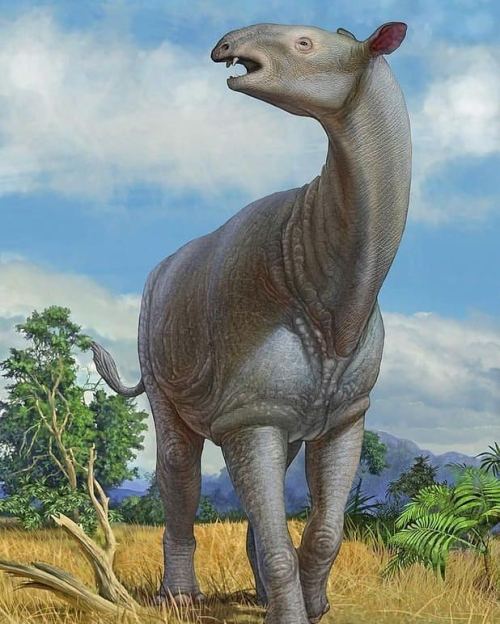
AND THEIR RELATIVES-- A MUSING on Evolution's radiate path, starting with Teleoceras and dwelling on the giant Paraceratherium. The wonders of the planet's bio-history will never let the investigator down, or cease to inspire the student of Earth's outbranching, evolutionary methodology. It is shocking that semi-Fabulous, luminous evidence of the development of consciousness is blocked from presentation to the pig-ignorant, who are content not to know it. The Treasures of Time lie high, as Sir Thomas Browne wrote in his HYDRIOTAPHIA; Dr. Browne spoke of their easy access to those who turn a spade in the deep-delved earth, "scarce below the roots of some vegetables." Just a small effort, he indicated, may dislodge them. In the same way, the revelations of the paleontological column are waiting nearby, as it were, easily retrievable from the slightest effort. The voices of the past also perform here, in full chorus, as always...

ARS POETICA ET CETERA
July 24, 2026 10:00pm
WITH SPECIAL GUEST DAVID NORMAL includes a surprise visit from RV's own John Hell, delivering the new Radio Valencia T-shirt in the proper size (it fits perfectly). We welcome poet and fine artist Mr. Normal once again and exchange poetic compositions. Dylan Thomas provides additional verses. Those who wish to follow the intricacies of David's Cat-worshiping cult may find much information at
https://cathenge.net/category/cathenge-mythos/
Prospective Cat Priestesses may also contact him via that site. In the show, we speak of the Cat interstellar history, including their eternal, ongoing war with the loathsome Disco Reptilians. In that exciting discourse's midst, we end precipitately, without an outro, apparently in medias res. Next week: a description of the legendary Planet X.
https://cathenge.net/category/cathenge-mythos/
Prospective Cat Priestesses may also contact him via that site. In the show, we speak of the Cat interstellar history, including their eternal, ongoing war with the loathsome Disco Reptilians. In that exciting discourse's midst, we end precipitately, without an outro, apparently in medias res. Next week: a description of the legendary Planet X.

THOMAS, BORGES, KROB
July 17, 2026 10:00pm
ET AL. Yes, again deranged “edits” segue into a cascade of echoing glossolaliac madness, the voicing of lyric ruminations from the free-falling brains of disintegrating personalities. We record times such as these; such iterations suit us when the minds of humans are made dizzy and their imaginations are wrought up to a frenzy by the whirl of events. A visit from KrOB grounds the present episode in ongoing struggles against the well-meaning (and less so) opposition of the unwittingly obtuse. In the meantime, it should be noted here (and elsewhere, but especially here) that the long-awaited return of the semi-legendary Live Show has been postponed again, to a probable October date. So has The Ask Dr. Hal! Show, the Home Edition, to September, probably. Like the Grapes of Tantalus in the Underworld, these shows recede to just out of reach as we stretch our arms forth to grasp them. The huge, oncoming Juggernaut known as Burning Man is largely to blame-- its heavy gravitational pull deforms our orbital path...

LABYRINTHS AND LUCIFUGISM
July 10, 2026 10:00pm
MAKES A FAIRLY GOOD TITLE, BUT regularly missing the Blessed Day may be a sort of Labyrinth in itself, which the tyranny of the clock so often compels me to visit.
July 10th is the 191st day of the year-- 192nd in Leap Years-- in the Gregorian calendar; 174 days remain until the end of the year. July 10th marks several notable global observances, including National French Fry Day (a popular Belgian-origin food celebration), National Kitten Day and Bahamas Independence Day. It is also historically significant as the date, in 1962, when NASA successfully launched Telstar 1, the world's first active communications satellite and inspiration for a familiar melody from the Sixties... On the Show, we also are regularly engaged in communicating to our target audience (You Know Who You Are). With the old, faithful Chatter Box now apparently defunct and disabled, it was not easy to know whether we had successfully reached those fated to be receptive. Helpful was longtime listener Dr. Penny, who made a live call to the show, abled by the conscientious contrivance of KrOB. Listen as Ms.Penny confirms that the ideal relation between sender and receiver has indeed been made, even in the face of an obstreperous mob of manifold obstructions and difficulties. Maybe the problems will be fixed by the time the next episode comes ambling around. This particular show is supported by the poems of Dylan Thomas, the musings of Borges and the special dispensation of KrOB's ministrations. In addition to the observance of National French Fry Day, July tenth marks National Piña Colada Day, Teddy Bear Picnic Day (we play the song) and National Clerihew Day (celebrating a whimsical, four-line biographical poem style) also deserving of commemoration. Here is an oft-given example of the Clerihew form:
Sir Humphry Davy
Abominated gravy.
He lived in the odium
Of having discovered sodium.
Or, alternatively,
J.R. "Bob" Dobbs,
A friend of KrOB's,
Once sold his Lore
From door to door.
If Radio Valencia
Gives offense t'ya,
Send a review
Or maybe a few.
KrOB arrived, and can be heard, an exact half-hour into the Show.
July 10th is the 191st day of the year-- 192nd in Leap Years-- in the Gregorian calendar; 174 days remain until the end of the year. July 10th marks several notable global observances, including National French Fry Day (a popular Belgian-origin food celebration), National Kitten Day and Bahamas Independence Day. It is also historically significant as the date, in 1962, when NASA successfully launched Telstar 1, the world's first active communications satellite and inspiration for a familiar melody from the Sixties... On the Show, we also are regularly engaged in communicating to our target audience (You Know Who You Are). With the old, faithful Chatter Box now apparently defunct and disabled, it was not easy to know whether we had successfully reached those fated to be receptive. Helpful was longtime listener Dr. Penny, who made a live call to the show, abled by the conscientious contrivance of KrOB. Listen as Ms.Penny confirms that the ideal relation between sender and receiver has indeed been made, even in the face of an obstreperous mob of manifold obstructions and difficulties. Maybe the problems will be fixed by the time the next episode comes ambling around. This particular show is supported by the poems of Dylan Thomas, the musings of Borges and the special dispensation of KrOB's ministrations. In addition to the observance of National French Fry Day, July tenth marks National Piña Colada Day, Teddy Bear Picnic Day (we play the song) and National Clerihew Day (celebrating a whimsical, four-line biographical poem style) also deserving of commemoration. Here is an oft-given example of the Clerihew form:
Sir Humphry Davy
Abominated gravy.
He lived in the odium
Of having discovered sodium.
Or, alternatively,
J.R. "Bob" Dobbs,
A friend of KrOB's,
Once sold his Lore
From door to door.
If Radio Valencia
Gives offense t'ya,
Send a review
Or maybe a few.
KrOB arrived, and can be heard, an exact half-hour into the Show.
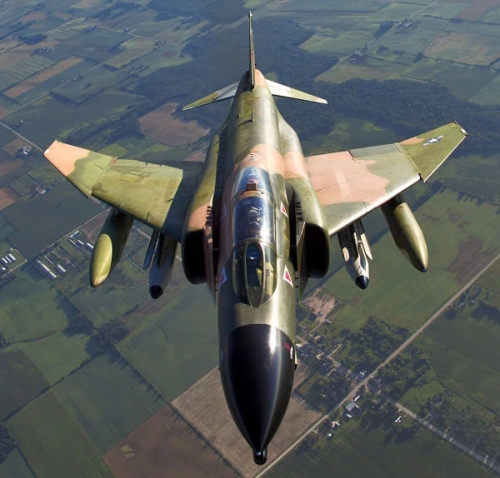
JETT LANDS AT THE SHOW
June 26, 2026 10:00pm
ONCE AGAIN, and the usual Monologue soars as a dialogue. Jets operate by generating massive forward thrust using gas turbine engines, allowing the wings to produce lift as the plane accelerates. The core mechanism runs on a continuous four-step cycle: intake, compression, combustion, and exhaust. Our Jett is with us from the beginning. Listen as he sees for the first time some art of mine animated by the AI program Grok, through the courtesy of Ivan Stang, the Sacred Scribe of the Church of the SubGenius. And we bat a number of subjects around as we're wont to do. After Jett leaves to catch his transport back across the water, we hear from Borges, an excerpt from his LABYRINTHS. And we have the usual avalanche of taradiddle, jibber-jabber and fooferaw.

L'ALLEGRO
June 19, 2026 10:00pm
BY MR. JOHN MILTON makes an appearance during this episode. The poet invokes Euphrosyne, the Goddess of Mirth, whom we also serve. According to Hesiod, she and her sisters, Thalia and Aglaea, are daughters of Zeus and the Oceanid nymph Eurynome. Alternative parentage attributes Zeus and Eurydome, Eurymedousa, or Euanthe; the god Dionysus and Coronis; or Helios, the Titan whose job was taken over later by the Olympian Apollo, with the beautiful Naiad Aegle.
The Roman author Hyginus in his FABULAE also mentions a figure named Euphrosyne, whom he cites as the daughter of Nox, or Night and Erebus, a.k.a. Darkness.
Our Euphrosyne is a goddess of good cheer, joy and mirth. Her name is derived from (the female version) euphrosynos, "merriment." Pindar wrote that these goddesses were created to fill the world with pleasant moments and good will. Their presence is needed nowadays more than ever. Too many are the unsatisfying and ultimately exhausting manufactured simulacra of joys, the distractions of false entanglements.
The Roman author Hyginus in his FABULAE also mentions a figure named Euphrosyne, whom he cites as the daughter of Nox, or Night and Erebus, a.k.a. Darkness.
Our Euphrosyne is a goddess of good cheer, joy and mirth. Her name is derived from (the female version) euphrosynos, "merriment." Pindar wrote that these goddesses were created to fill the world with pleasant moments and good will. Their presence is needed nowadays more than ever. Too many are the unsatisfying and ultimately exhausting manufactured simulacra of joys, the distractions of false entanglements.

EINE KLEINE NACHTMUSIK
June 12, 2026 10:00pm
UND eine Lyriklesung. A night of music and poetry-- that was planned. How did we do? The roaring noise of the frenetic dance club next door, picked up by our equipment, never leaves us. Then, when poet and artist David Normal came in with his friend, pianist William B. Kirkpatrick, it developed that Mr. Normal was dissatisfied with the equipment, and much time was wasted attempting to make adjustments. Finally we were treated to music on the spot, as promised. Later, we traded our own poetic compositions back and forth. Perhaps in the fullness of time we may perform similarly with a reduction in angst, impatience and frustration. All grist for the mill, as they say. Listen for the high points (or the low points, if they should happen to amuse)... WITH: Robert Bly and the Archives. Three hours.

DR. SILVER'S GOLDEN ELIXIR
June 5, 2026 10:00pm
AT TIMES MAY BE SORELY NEEDED to summon energy in the necessary amount. Some type of Moxie-- an infusion of vitality releasing tonic. When such nostrums remain unavailable, then we search inward for wellsprings of unsuspected agents of motivation. These sometimes appear in the interaction of opposing tranches of Archival Material. And so the great work continues, erecting, stone by stone, the form of an associative structure. Like a coat of two colors, the bifurcate Show serves dual functions. On the one hand the recorded Archive (or "Multi-Indexed Memory Bank") provides the academic community with a specialized repository of relics and artifacts from the Inception of the Church, with an emphasis on those that may prophetically demonstrate unusual or curious technological qualities. On the other hand the Show serves the "walk-ins," or general public, by providing the visitor a hands-on experience of "life in the Palimpsest..."

LINES WRITTEN ON THE RECENT LOSS OF THE TITANIC
May 29, 2026 10:00pm
BY THOMAS HARDY, also known as The Convergence of the Twain, is the Preamble Poem beginning this episode. Though we explore a medieval book about Lions and visit Hilaire Belloc for more on the topic, we spend an extra hour after welcoming KrOB, our guest, discussing many other divers matters. Philo, Puzzling Evidence, a succession of noted SubGeniuses and fellow-travelers-- all make their appearance as we re-weave the Tapestry of our ongoing creation. Remember-- four hours! Not three--- four! We hope listeners consider this extra time well-spent. We go out discussing a most unlikely Head Transplant. Just speculatively...

THE DARK FOREST OF OVERARCHING, ENTANGLED TREES
May 22, 2026 10:00pm
ASSOCIATED WITH LEWIS'S WOOD BETWEEN THE WORLDS or, alternatively, the Dark Wood in which the pilgrim Dante finds himself at the beginning of the Commedia. We invoke this legendary woodland, whether a kind of inter-world as depicted by Lewis or, allegorically, the Earthly landscape of confusion and oppression commonly obscuring the Divine Light and its guidance. In a sense, we start in a place of undue and confusing complexity, and (ideally) end having surmounted all our objectives during the allotted three hours. Or consider a wooden footbridge-- we need to test every semi-rotted board comprising it so not to be plummeted into the Abyss stretching between the two sides, this one and... the Other. Yes, that "Dark Wood" most famously refers to Dante Alighieri's Selva Oscura (Dark Wood of Error) in Canto I of the Inferno-- it's a symbolic, terrifying forest of Sin and Confusion. In reality, YOU can experience a literal Dark Wood of giant trees right in your backyard, in Northern California. You can pick up the Show from there, provided you have the proper equipment. With: SubGenius Sacred Scribe Ivan Stang's Pufferdome address to the Pagans at Starwood 2018.

PUZZLING EVIDENCE RETURNS
May 15, 2026 10:00pm
AS A GUEST: conversation ensues. At least this truth we hold to be self-evident: that scholars in all fields use evidence, but that all evidence is not created equal. The early modern period was defined as "early" modern in part by the emergence of the category of evidence (and the condition of self-evidence) in fields as diverse as law, science, theology, and epistemology. The question of what counts as "evidence" was therefore central to the intellectual history of that nearby previous period; it has also become central to the concerns of disciplines which have been so distinguished by virtue of the information and hints they count as much as the wider methodologies they deploy. Through the lenses of its participants' work, this audio file, evening colloquia exploring the resilient differences between varied assertions in their definitions of historical or scientific fact smooths over the roiling waters of contention. Differing views and impressions compel no enmity but rather a sense of satisfaction and familiarity. We go through the naturally arising topics and emerge with our inward files in better order. Familiar names get dropped and prophetic utterances reveal hitherto cryptic evolutionary developments. Follow along as we watch a Monster Movie.
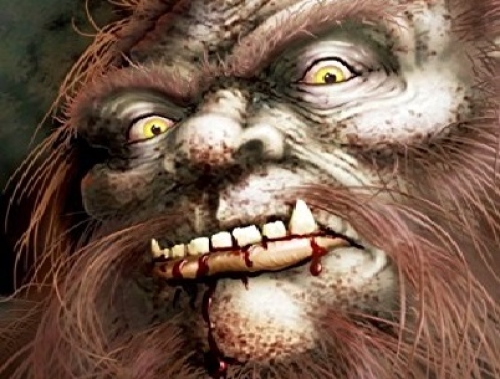
RIGHT-WING SUBGENIUS HILLBILLY APOCALYPSE--
May 8, 2026 10:00pm
OR, COMMUNAL SubGenius Luv-fest? Will the intellectual "Market" dictate the future of our Movement? SubGenius detractors, affected by the unsavory sight of the unappetizing SubGeniuses themselves, allow themselves to forget the literary, poetic and artistic currents comprising the Church's most vigorous and lasting elements. Though it seems to the un-Elect that "all these shows" are of a piece, as it were (which is generally true), they do differ from each other in measurable increments. This show is for those who enjoy reading and writing, which puts its keel close to the true vessel of the Original Church. Just ask our (not-so-) many followers and fellow travelers who listen (semi-) regularly to Our words. Do we mention the Forest Man (Sasquatch, or Gigantopithecus) said (in REVELATION X: THE "BOB"APOCRYPHON and other, more recent tomes) to be the ancestral form itself of the SubGenius in (his, hers, its) most characteristic manifestation? Listen closely...
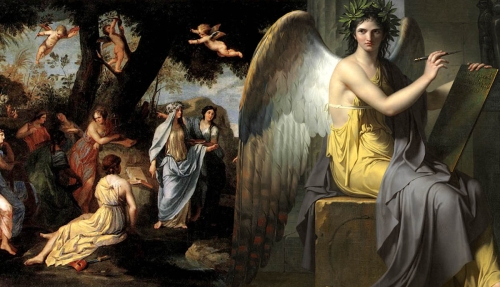
ERATO, THALIA, POLYHYMNIA AND KALLIOPE
May 1, 2026 10:00pm
ARE ALL CALLED UPON during the presentation of various poetical creations. With sermon-lecture at Starwood in 2019: a key to gods and demons (the Inboard System). With: Stan Freberg, Puzzling Evidence, M. Peppe and others in colloquium. A review of the semi-legendary coffee-table book about coffee-table books: A PICTORIAL HISTORY OF PICTORIAL HISTORIES. Poems by Lucien Stryk, Coleridge, Poe and Robins, among others.
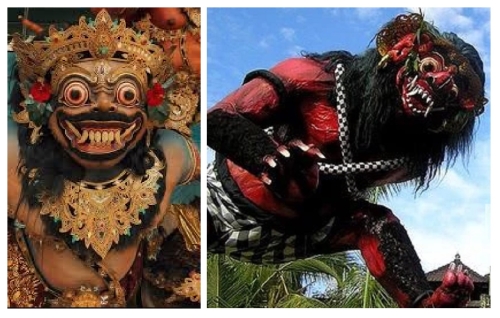
THE DEMON FESTIVAL OF THE OGOH-OGOH
April 24, 2026 10:00pm
ON THE EVE OF NYEPI (the Day of Silence) manifests large, handcrafted icons, mis-called idols by some, often representing demons, mythological figures or Bhuta Kala, or negative spirits. Guest David Normal, world-traveling artist at large, recounts his experiences on Bali, both island and propinsi, (or provinsi-- province), one of the Lesser Sunda Islands of Indonesia situated 1 mile east of Java and separated by the narrow Bali Strait. KrOB makes periodic visits. Topics range from POPEYE MEETS SINDBAD to the ranks of the Princes of Hell. We end abruptly.

MATERIA MEDICA FOR SPLENIC FLEXURE
April 17, 2026 10:00pm
OR, MEMENTO MORI Part One-- The episode is post-doc and post-op. The Natural Philosopher Democritus trained himself by going into solitude and frequenting mausolea and tombs. And Plato's Phaedo, wherein the death of Socrates is recounted, introduces the idea that the proper practice of Philosophy is "about nothing else but dying and being dead." The Stoics of classical antiquity were notoriously prominent, as it were, in their use of this discipline, and Seneca's letters are full of injunctions to meditate on Death. We hope it helped him, tutor to the uncontrollable Nero, when that emperor later gave the order for his execution. Another Stoic of note, Epictetus, author of the immortal Enchiridion, told his students that when kissing their children, brothers, or friends, they should remind themselves that they themselves are mortal, curbing their pleasure, as do "those who stand behind men in their triumphs and remind them that they are mortal." The Stoic Marcus Aurelius invited the reader (himself) to "consider how ephemeral and mean all mortal things are" in his Meditations. About that character standing behind you in the chariot: In some accounts of the Roman triumph, a companion or public slave would stand behind or near the triumphant general in his garlanded chariot during the procession and remind him, from time to time of his own mortality ("Remember, thou art mortal"), or prompt him to "look behind." You never know Who might be back there.

RADIO, THAT MYSTERIOUS PHENOMENON
April 3, 2026 10:00pm
HAS ALREADY HAD ITS GREAT DAY, BACK WHEN EVERYBODY listened-- the 1930s, say... and this presentation is only a counterfeit of Radio-- or, is it? The expression "Internet Radio" is often in use. And, we are creditably informed, in some esoteric way radio waves are involved somewhere. With: John Zacherley "the Cool Ghoul," G'boagfram, KrOB-- live-- and others, shadowy, wispy ghost essences. The solution to the problem of the Lunar Dust. Bible illustration, as executed by Robert Crumb and Basil Wolverton. The Tower of Babel. From there to the Japanese Space Elevator. We reminisce about the St. Stupid's Day Parade. Where, biologically speaking, is "the brain" actually located in the anatomy? The Great White Throne Judgement. The Willy Loman of Radio. Plenty of gristle to chew on, Rocket Rookies and Etherettes...
Showing podcasts 1 to 20 of 236 NEXT